

Zimbabweans face hate in South Africa
| Musina, South Africa
You know it's bad when you have to go to another country to buy bread.
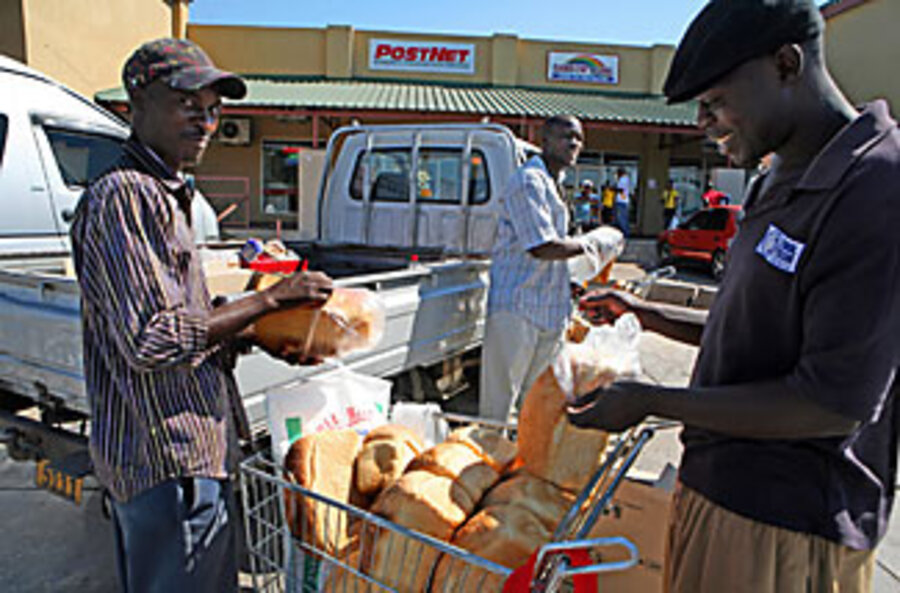
That's just what Bellarms and his brothers do every day, buying enough loaves of bread in the South African town of Musina to fill the back of his pickup truck and take it back across the border to his native Zimbabwe to sell for 200 million Zimbabwe dollars (roughly $1 US) a loaf.
"Eish, it's bad there," says Bellarms, who declines to give his full name because of possible reprisal from Zimbabwe police. "We come every day except Saturday, buying boxes of soap, cooking oil, the same commodities that you just can't find in Zimbabwe anymore. We just wait for God now. He knows that we face trouble here."
In a country where many farmers have stopped farming, where a chicken can cost a quarter of a teacher's monthly salary and bread half that – if you can even find it – hunger is a looming crisis that is sending increasing numbers of Zimbabweans out of the country for their mere survival.
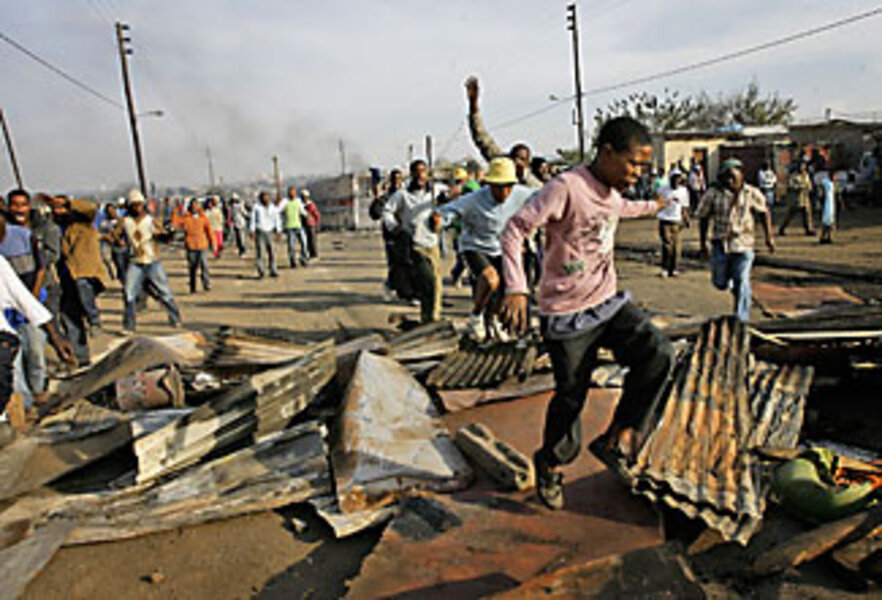
The rising number of Zimbabweans in South Africa – estimated to be nearly 3 million – has created growing anxiety among the working-class South Africans who compete with them for jobs. This anxiety has recently turned to anger, as a wave of antiforeigner attacks in Johannesburg townships such as Alexandra and Diepsloot, and even downtown Johannesburg itself have killed 22 in the past few days, and left 217 others injured and nearly 6,000 homeless.
"If you listen to the reasons given by the people who have participated in the violence, you hear about how foreigners have taken their jobs, foreigners have taken their houses, foreigners are committing crimes, so you see there are socioeconomic concerns in the communities where the violence is taking place," says Prince Mashele, head of the crime and justice program at the Institute for Security Studies (ISS) in Tshwane, as Pretoria is now called.
The longer Zimbabwe's political crisis continues, the greater the economic hardship on the Zimbabwe people, and the more those people come to South Africa and other countries for relief. Those who work for a salary find their salaries worthless by the time they get paid. That's why those Zimbabweans who have cars and can afford to do so have gone into commodities – buying everyday basics like flour, sugar, cooking oil on up to bags of cement – and selling it for a profit.
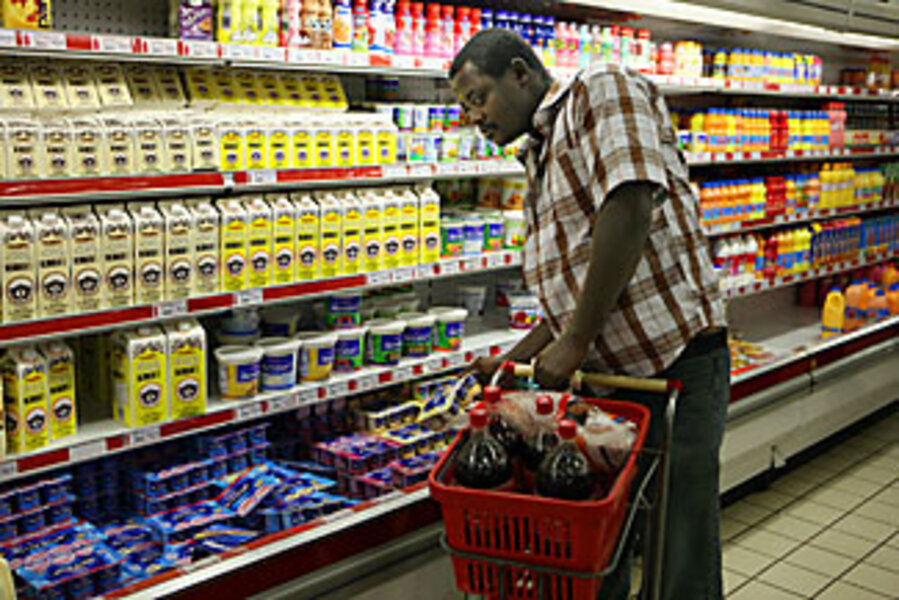
As in any crisis, there are winners and losers, and the nearly endless stream of Zimbabweans coming to the tiny border town of Musina has meant good business to local shopkeepers.
"Unfortunately, this helps business but it doesn't help people," says Manny Dos Santos, owner of the Messina Groentemark, a supermarket, who has had to double his shipment of food stocks in order to keep pace with demand.
"People buy everything," he says, walking by a tall bread rack that has already been emptied by 10 a.m. on a recent Sunday morning. "They buy bread, vegetables, oils, sugar, coffee, mealie [corn] meal. They buy 100 kilogram bags of potatoes, onions." He sighs. "This is just an unreal situation."
Donald Ndou, manager of the Superspar supermarket in Musina, says that 70 percent of his customers come from Zimbabwe. "We used to know how to budget and prepare for the demand, but now it's crazy. They'll just come in with an order and buy everything off the racks."
"You can't buy anything in Zimbabwe now," says William, who, as a long-haul truck driver from Harare, has been able to earn his salary in foreign currency and to feed his family by buying monthly groceries in neighboring countries such as South Africa. "Nobody has money in Zimbabwe, and nobody outside of Zimbabwe is doing enough to help us out."
For their part, many South Africans view their Zimbabwean neighbors as a menace. Some complain that the flood of Zimbabweans has taken away jobs, while others blame the higher price of food on Zimbabwean buying sprees.
"Today a loaf of bread costs 8-1/2 rand ($1.13); before it was five rand (66 cents)," says Razwimisane, a South African from Musina. "It's because of this crisis."
As the violence against foreigners continues to spread in Johannesburg, Mr. Mashele of the ISS says that the government needs to reach out to community leaders and go beyond the usual high-profile calls for calm.
"There's no way the South African police can outnumber the South African public, so you need to not only be reactive, but also need proactive work of talking with community leaders about their concerns," says Mashele. But the problem is, very few top leaders live in the communities where the violence takes place, so they have little credibility. "Communities increasingly are not paying attention to political leaders."